Introduction-
If there’s one you can say about London, it’s undeniably a city of the arts. From hundreds of internationally renowned museums (Sound of Life, 2023) to world-class television (Turner, 2017), the city’s art scene holds important significance in forming the city’s identity. But London theatre is a special case that directly mirrors the city’s constantly evolving social and political landscape.
Since Shakespeare’s time, theatre in London has been a platform for actors to voice their perspectives on life around them through biting satire or powerful dramatics. But as time has progressed, theatre in the city has arguably become one of the most vital platforms for marginalised groups to share and dramatize their own experiences within life in and beyond London, mirroring the city’s rise in multiculturalism in the modern day.
Indeed, London theatre is no longer just a white man’s playground, yet the reaction to this can often be egregious in a way that reflects the divisive world we live in today. In a way, London theatre directly reflects how race is seen and treated in the city, especially after multiculturalism became a defining characteristic during the mid-20th century.
Pre 20th Century Oppression-
Given how theatre in London has been around since the 16th century, it’s no surprise that there is a dramatic difference between the approach of multiculturalism and race in particular. London’s population at the beginning of theatre in the city (the 1500s) was only 50,000 (Porter, 2016) and even though the ethnic population of London was poorly documented, it is not hard to guess that those who did live during this period were treated abhorrently. However, Tudor-era theatre did see some (at the time) progressive themes regarding multicultural integration and white supremacy.
Shakespeare’s Othello was one of the first pieces of Theatre to truly show a black protagonist in a sympathetic light, with Shakespeare characterising him as a charming and rational man corrupted by another’s lies and manipulation. This is in severe contrast to the short story the play was based on which presents as truly irredeemable because of his race, showing there was some pushback to the racist rhetoric at the time expressed through theatre. Developments like this would help usher in black performers emerging during the 19th century, including Ira Aldridge who was arguably the first black actor to break into mainstream England thanks to his work in Shakespeare including Othello (Bursby, 2020). As one of the first prominent black theatre actors, his impact is undeniable and has been widely acknowledged both in and outside London theatre. Famous actor Lolita Chakrabarti, who wrote the play Red Velvet about Aldridge, put it best saying “To know that Ira Aldridge was here almost 200 years ago and that he defied everything that society set down for him… He shouldn’t have been an actor. He was a black man. He should have either been a slave or, perhaps, a preacher. But he defied all that and he loved the theatre, and he loved Shakespeare, and he did it. And to have done that when the expectation was so low, I think he’s an inspiration for people now, but I think he also goes before all of us and we all stand on his shoulders.” (Chakrabarti, 2020).
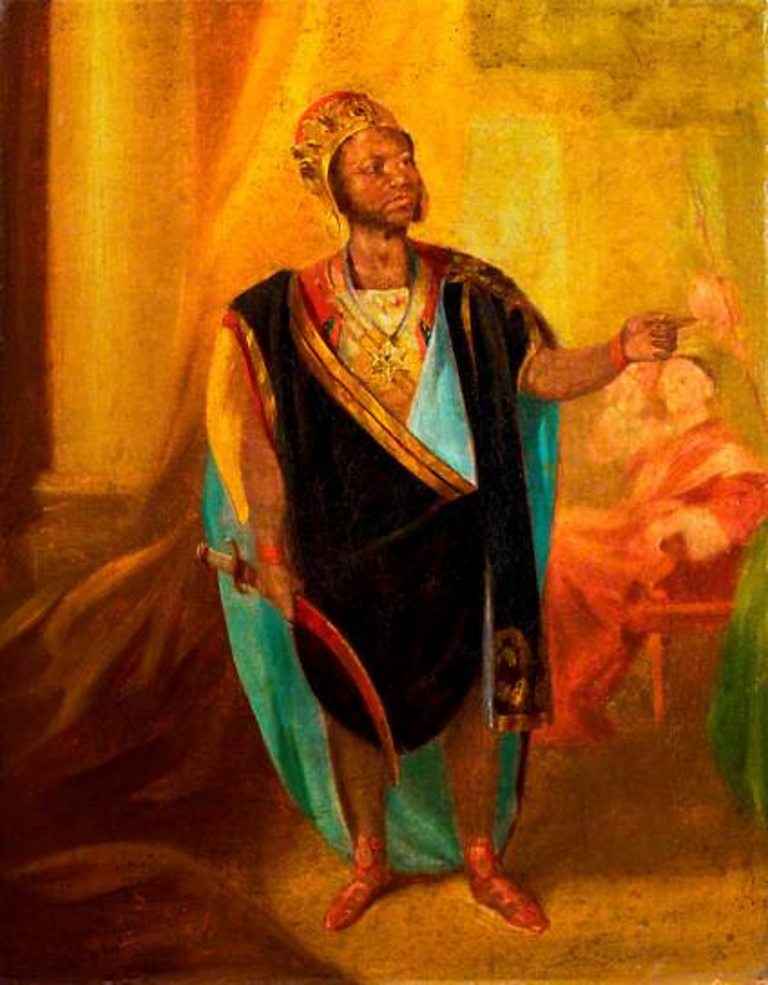
Othello and Aldridge were seemingly outliers during this period, however. Many plays depicted cultures outside of England (and Europe in general) as ones to be feared or mocked, often in a way that upheld the colonialist and Eurocentric views that were prevalent during this period. Even Aldridge himself received numerous racially motivated attacks during his time, including one London critic citing that due to his race, “it is utterly impossible for him to pronounce English,” (Wilcox, 2016). John Dryden’s 1664 play ’ The Indian Queen’ and its 1665 sequel ‘The Indian Emperour’ are both harrowing examples of this, romanticising Britain’s colonial rule over India and colonialism in general as a political necessity (Hutner, 2001). This isn’t to mention that every non-white character was either portrayed as stereotypes or, in the case of the Indian princess, fetishised completely for the male gaze. Again, attitudes like this were rampant in London and England/Europe as a whole thanks to colonialism and slavery, but it doesn’t change the fact that the representation of minorities during this period was and is completely abhorrent and a dark shadow that looms over London theatre to this day.
20th Century Change-
The dawn of the 20th century saw notable changes when multiculturalism in London truly began to flourish. Thanks to the rise in immigration and the Windrush generation, London became renowned for being one of the most culturally diverse cities in Europe and the theatre reflected that too. Even before such events began, 1928 saw the groundbreaking musical ‘Showboat’ premiere at the Drury Lane. The show was one of the first to tackle racial segregation openly and featured renowned actor and civil rights campaigner Paul Roberson in the starring role.
By the mid-20th century, the growth of civil rights and similar political movements in the capital meant shows were no longer afraid to be more overtly political. This coincided with the countercultural movement of the 60s, an era characterised by liberalism and alternative living that went against the establishment of the day (Osgerby 2022). 1968’s Hair was one of the first to truly reflect the city’s new era, a direct exploration of hot-button topics of the day such as war, drugs and interracial relationships, and is still seen as an important piece of theatre history due to its openness to such issues (Lee, 2018).
Its run at the Shaftesbury Theatre left an indisputable impact on the industry, paving the way for more alternative shows and musicals including 1977’s ’Bubbling Brown Sugar’, which was one of the first pieces of theatre written by black talent. Because of this representation both on stage and behind the scenes, the black representation in the show was more earnest and wasn’t riddled with stereotypes like ‘showboat’ decades prior (Dietz, 2015). Progress was slowly being made in theatre spaces with more opportunities for non-white performers and writers, including the likes of Caryl Phillips and Michael Abbensetts. The end of the century saw shows like The Lion King take the West End by storm and featured a majority black cast at the forefront, and this would only continue in the decades to come.
With that being said, bigotry was still rampant throughout the city, more so before immigration started to boom during the 50s (Knittel, n.d). Before the Racial Relations Act of 1968, it was increasingly difficult for non-white actors to achieve any kind of career in the industry thanks to the rampant bigotry not being controlled. Because of this, no theatre at the time was able to present truly authentic representations of minorities leading to regurgitated stereotypes and tropes. This includes the frequent use of makeup by white actors to portray different races, whether that was the minstrel shows of the 30s and 40s (Lawson, 2012) to Jonathan Pryce’s offensive portrayal of a half-Vietnamese character in ‘Miss Saigon’. Practices like these were normalised due to the lack of care and attention given to minority workers in the industry and a lack of acknowledgement of their views and objections. Because of this, it’s safe to assume that many minorities felt less inclined to break into the industry. Even those who were able to break into the industry admit to being normalised to racist practices. Jon Jon Briones, an ensemble member of the original London production of Miss Saigon, said that he didn’t see an issue with the yellowface at the time as film and TV desensitised him to it (Paulson, 2017). It would take the dawn of a new century for these archaic ways to truly be challenged as London entered into a new and divisive era.
21st-century revolt:
Compared to the beginning of the 20th century, diversity and race within London are almost night and day. The impact of the Racial Relations Act and immigration made London a much more welcoming and cultural place and that extends to its theatre industry. ‘Colour Blind’ casting became increasingly more common with shows like Wicked, which had its three leads played by people of colour in 2023 (Gans, 2023). Diverse shows like Hamilton gained momentous popularity and praise, including winning 7 Oliviers in 2018 (Brown, 2018). This would coincide with the trend of race-swapping certain roles in Shakespeare productions, most notably Romeo and Juliet at the Duke Of York Theatre in 2024 and a musical reimagining in 2019 (Harmon, 2023). Leaps in diversity have also been seen behind the scenes. Indhu Rubasingham, for one, has become one of the most powerful names in theatre today. Her acclaimed leadership of the national theatre has seen it become a juggernaut of the industry thanks to shows such as The Motive and the Cue and the West End Transfer of Hadestown (Crompton, 2024). Black British theatre company Talawa Theatre Company have also had the opportunity to stage and produce their productions in London including Running With Lion in 2022, which was praised for being ‘potent and haunting’ (Akbar, 2022).
Despite this progress, it’s clear that racism and prejudice haven’t disappeared entirely. The 2016 Brexit referendum had a significant impact on racism as hate crimes rose 15-25% in its aftermath and effects can still be felt almost a decade later (Sprigg et al, 2024). It can be argued that Brexit has enabled people to be more open with their bigotry knowing that others share their sentiments. A Notable example of this within the industry include the reaction to the casting of Francesca Amewudah-Rivers as Juliet in 2024, with Francesca admitting she didn’t feel safe at work (McNab, 2024). Just in December last year, black cast members of the Only Fools And Horses Musical were targeted by racist hecklers during a performance (Rosseinsky, 2024). Events such as this may be why more than 70% of black theatre professionals find diversity initiatives purely just symbolic and don’t ignite actual change (Chambers, 2024)
But it’s important to note that these events don’t define the industry. Theatre in London has been more vocal than ever regarding race because of such events, with many using their platform and personal experiences to good use. This became even more apparent when Black Lives Matter began to gain huge momentum in 2020 and thus black writers and performers became more confident in expressing the racism and harassment faced by them. Playwright Roy Williams is a leading example of someone using his experiences within the city to challenge perspectives and start discussions surrounding race. ‘Death In England- Delroy’ is probably the most potent example of this, examining the main character Michael’s crisis as he examines his self-identity in London’s multicultural landscape (Akbar, 2024). Williams’ focus on the realities of race in modern city life makes his work the personification of modern London theatre.
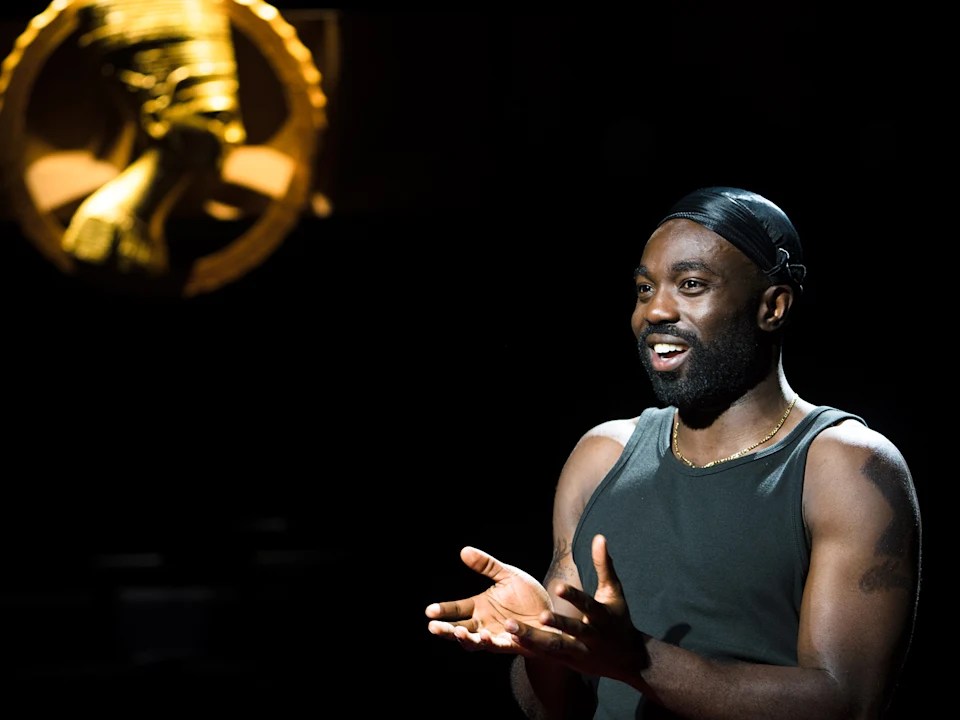
Paapa Essiedu In ‘Death Of England- Delroy’ At Soho Place In 2024
Conclusion-
In summary, the increase in diversity within London has greatly changed its theatre industry by broadening the scope and perspectives of stories being told, pushing the industry to new horizons. From 20th-century pioneers like Ira Aldridge to modern trailblazers like Roy Williams, London theatre has transformed into a cultural melting pot allowing marginalised groups to express and share experiences directly linked to life in the city. But these changes reflect the cultural shift in London and its status as a diverse city redefining what the city is and how life has changed and evolved, which are regular themes explored in the modern theatre today. No matter what challenges the city and the industry face, London Theatre will be there to challenge and uplift the diverse community it’s built.
Written By Abbie Matthews
Bibliography-
Akbar, A. (2024) Death of England: The Plays review – Brexit-voting bailiff electrifies this post-Boris revamp, The Guardian. Available at: https://www.theguardian.com/stage/article/2024/jul/31/death-of-england-the-plays-review-brexit-voting-bailiff-electrifies-this-post-boris-revamp
Akbar, A. (2022) Running With Lions review – grief haunts a British Caribbean family, The Guardian. Available at: https://www.theguardian.com/stage/2022/feb/16/running-with-lions-review-grief-british-caribbean-family-sian-carter-lyric-hammersmith
Barriball, James (2011) ‘HAiR 1968 (London Cast)’, YouTube, Available at: https://www.youtube.com/watch?v=VagFIPJwTxA
Billington, M. (2016). Love review – engrossing homelessness drama leaves us enraged, The Guardian. Available at: https://www.theguardian.com/stage/2016/dec/14/love-review-homelessness-drama-alexander-zeldin-dorfman-national-theatre
Busby, D. (2020) The history of Black Theatre in Britain – the mancunion, Manchester University Mancunion Newspaper. Available at: https://mancunion.com/2020/10/16/the-history-of-black-theatre-in-britain/
Chambers, Kate (2024) Wake-up call: Black theatre workers facing ‘structural and systemic challenges’, The Stage. Available at: https://www.thestage.co.uk/news/wake-up-call-black-theatre-workers-facing-structural-and-systemic-challenges
Chakrabarti, L. (2020) Lolita Chakrabarti on Ira Aldridge, The Old Vic. Available at: https://www.oldvictheatre.com/stories/lolita-chakrabarti-on-ira-aldridge/
Clifton-Sprigg, j., Vujic, S., & Carr, J. (2024) Did the vote for Brexit lead to a rise in hate crime?, Economic Observatory. Available at: https://www.economicsobservatory.com/did-the-vote-for-brexit-lead-to-a-rise-in-hate-crime
Crompton, S. (2024) Meet Indhu Rubasingham, Now the Most Powerful Woman in British Theater, Vogue. Available at: https://www.vogue.com/article/indhu-rubasingham-national-theatre-profile
Death of England: Delroy Tickets, Lonodn Theatre. Available at: https://www.londontheatre.co.uk/show/41045-death-of-england-delroy
Dietz, D. (2015). “Bubbling Brown Sugar”. The Complete Book of 1970s Broadway Musicals. Rowman & Littlefield Publishers. ISBN 9781442251663.
Foster, T. (2023). New play takes a stab against gentrification, Socialist Worker. Available at: https://socialistworker.co.uk/reviews-and-culture/new-play-takes-a-stab-against-gentrification/
Gads, A. (2023) Lucy St. Louis and Alexia Khadime Make History in London’s Wicked Beginning March 7, Playbill. Available at: https://playbill.com/article/lucy-st-louis-and-alexia-khadime-make-history-in-londons-wicked-beginning-march-7
Gardner, L. (2014). Beyond Caring review – compelling exploration of zero-hours working, The Guardian. Available at: https://www.theguardian.com/stage/2014/jul/07/beyond-caring-review-zero-hours-contracts
Harmon, S. (2023) ‘Theatre and pop at its absolute excess’: William Shakespeare meets Britney Spears as & Juliet comes to Australia, The Guardian. Available at: https://www.theguardian.com/culture/2023/feb/21/theatre-and-pop-at-its-absolute-excess-the-broadway-hit-that-asks-what-if-juliet-just-got-on-with-it
Ira Aldridge as Othello in ‘Othello’ by William Shakespeare’, Victoria And Albert Museum. Available at: https://collections.vam.ac.uk/item/O85046/ira-aldridge-as-othello-in-painting-unknown/
Knittle, A. (n.d) 1950’s and 1960’s in London. Available at: https://www.kgs-tornesch.de/dokumente/upload/London%20Texte%20Un/1950%E2%80%99s%20and%201960%E2%80%99s%20in%20London.pdf
Lawson, M. (2012). Theatre should turn its back on blackface, The Guardian. Available at: https://www.theguardian.com/stage/2012/oct/23/good-riddance-blackface-mark-lawson
Lee, S. (2018). Hair: The musical that ‘changed theatre forever’, BBC News. Available at: https://www.bbc.co.uk/news/uk-england-london-45625785
McKie, J. (2016). Why musical Show Boat stays afloat. BBC News. Available at https://www.bbc.co.uk/news/entertainment-arts-35964077
McKnab. K. (2024) Romeo & Juliet’s Francesca Amewudah-Rivers Received Death Threats, Months of Racist Abuse: ‘I Didn’t Feel Safe at Work’, Teen Vogue. Available at: https://www.teenvogue.com/story/romeo-and-juliet-francesca-amewudah-rivers-received-death-threats-racist-abuse-i-didnt-feel-safe-at-work
Osgerby, B. (2022) Swinging sixties: From sharp mods to counterculture, Museum of Youth Culture. Available at: https://www.museumofyouthculture.com/teen-intro-four/
Parker, A. (2024). The D word: what now for diversity and inclusion in theatre?, The Stage. Available at: https://www.thestage.co.uk/long-reads/the-d-word-what-now-for-diversity-and-inclusion-in-theatre
Paulson, M. (2017) The Battle of ‘Miss Saigon’: Yellowface, Art and Opportunity, The New York Times. Available at: https://www.nytimes.com/2017/03/17/theater/the-battle-of-miss-saigon-yellowface-art-and-opportunity.html
Porter, S. (2016). Everyday Life in Tudor London. Stroud, Gloucestershire: Amberley Publishing. p. 9.
Rosseinsky, K. (2024) Only Fools and Horses Musical stars ‘visibly upset’ after racist abuse from crowd, The Independent. Available at: https://www.independent.co.uk/arts-entertainment/theatre-dance/news/only-fools-and-horses-musical-racist-abuse-b2669482.html
Sound of Life (2023) London has it all as a cultural hub, Sound of Life. Available at: https://www.soundoflife.com/blogs/places/art-city-london
Turner, J. (2017) What future for studios, Stage Screen And Radio. Available at: https://members.bectu.org.uk/advice-resources/library/2249#:~:text=The%20capital’s%20world%2Dclass%20crew,studio%20space%20is%20incredibly%20high
Wilcox, Z. (2016) The actor who overcame prejudice to win over audiences, BBC. Available at: https://www.bbc.co.uk/programmes/articles/5KBbcBqysXWg0QrmsCR47fl/the-actor-who-overcame-prejudice-to-win-over-audiences

 Abbie Matthews